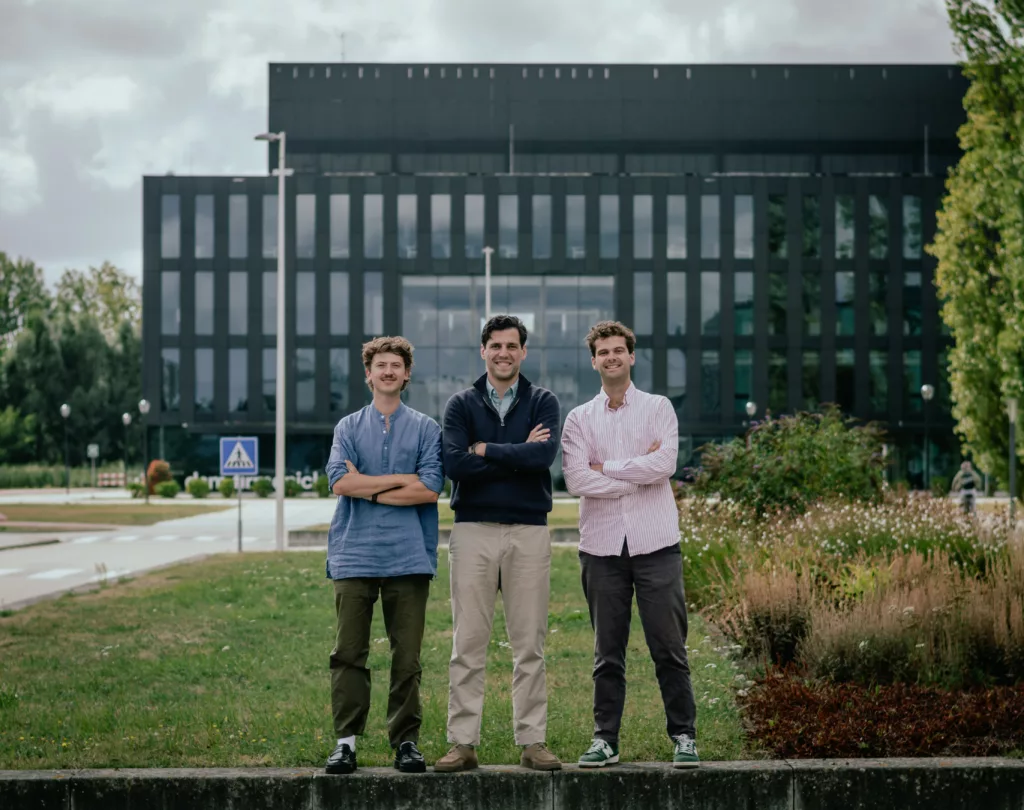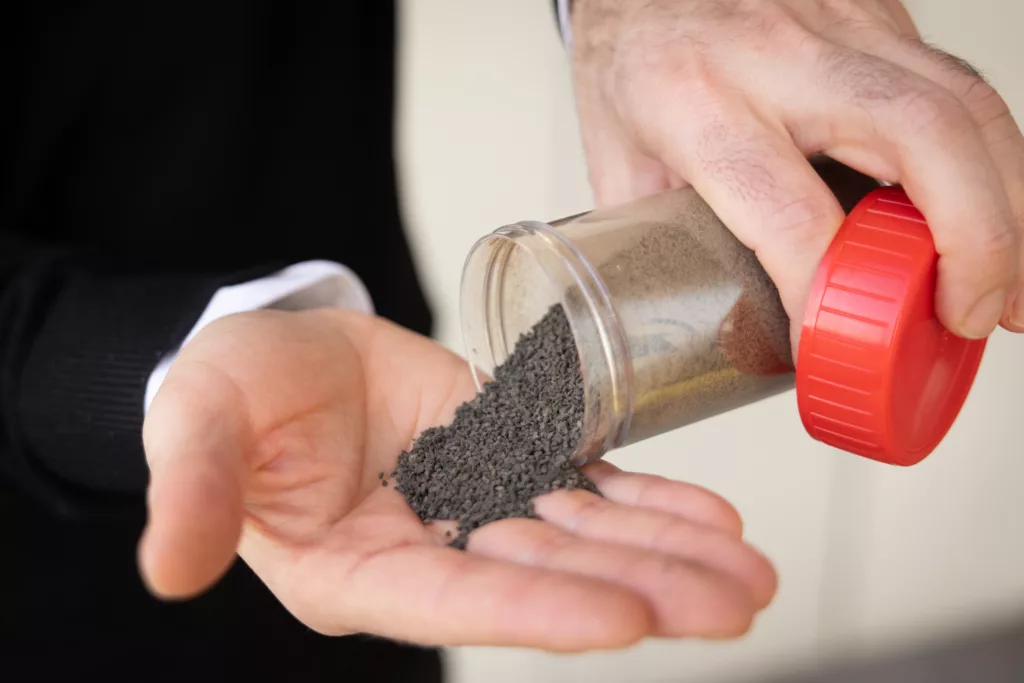

From sustainable polymers to next-generation cancer therapies, Cohort 2025 is made up of project teams aiming to address today’s biggest challenges in health, food, and materials. These teams are turning waste into value, rethinking how we produce and preserve food, and pioneering breakthrough diagnostics and treatments. Together, they represent the bold ideas and transformative science that will shape a more sustainable and healthier future.
With funding from the National Growth Fund through the Biotech Booster program, and with the support from our network of entrepreneurs, partners, and investors, these teams will accelerate their journey from the idea stage to market-ready, investable propositions. We’re proud to welcome them to the program!
Want to join the Biotech Booster program? Our 2026 round is open for pre-applications now: learn more.
Introducing Cohort 2025
BioFire
Fire safety without compromise: BioFire is a novel biobased alternative to conventional flame retardants, designed for industries wanting to be both sustainable and innovative. BioFire is produced from naturally occurring biopolymers present in wastewater sludge, a €250 million annual burden for Dutch Water Boards. BioFire transforms this burden into value, reducing both costs and emissions.
MycoSafe
MycoSafe develops mycocins – natural proteins produced by yeasts – as innovative biocontrol agents to replace energy-intensive and chemical-based preservation methods. Starting with non-alcoholic beer, their scalable yeast-based platform offers brewers a clean-label, eco-friendly way to prevent spoilage and reduce energy use, paving the way for sustainable food and beverage preservation.
Tulip Enzyme Solutions
Tulip Enzyme Solutions develops a synthetic cofactor system that enables scalable, sustainable biocatalysis for the fine chemical industry. Their technology reduces environmental impact, improves efficiency, and makes cofactor-dependent enzymes commercially viable for a wide range of products.
Tropical Oils
Tropical Oils engineers the microalga Nannochloropsis to produce sustainable oils with the same unique properties as palm and coconut oil, without deforestation or imports. Their patent-pending platform enables cost-competitive European production at scale, offering a greener alternative for food and personal care industries.
FavaFerment
FavaFerment uses microbial fermentation to improve the taste and sensory quality of plant-based proteins, starting with fava beans. Their technology reduces off-flavors in protein ingredients, enabling more appealing plant-based foods and supporting the EU’s climate-neutral protein transition.
Haplotagging
Haplotagging introduces a novel DNA sequencing method that makes Smart Breeding faster, cheaper, and more accurate. By adding haplotype context through a simple bead-based reagent, it empowers breeders of all sizes to develop high-yield, climate-resilient crops while preserving genetic diversity – helping secure the future of food.
FerMetaFix
FerMetaFix harnesses gut microbiome-derived metabolites and integrates them into functional foods through fermentation. Their approach provides a food-based, science-backed alternative to pharmaceuticals for metabolic health, promoting affordable, sustainable solutions to obesity and metabolic syndrome while supporting local agriculture.
Lumox
Lumox is developing Rapid PhotoTherapy (RPT), a targeted cancer treatment that uses nanobodies and light-activated drugs to selectively destroy tumors while sparing healthy tissue. Starting with head and neck cancers, their fast, precise therapy aims to improve recovery and quality of life for patients while opening new possibilities for treating other solid tumors.
Dual tumor targeting
Dual Tumor Targeting develops a novel immunotherapy platform that enhances tumor killing by simultaneously targeting two membrane proteins. Their scalable, multipurpose approach aims to increase response rates in aggressive cancers offering a broadly applicable solution independent of genetic heterogeneity.
tRNA for CMT
tRNA for CMT is developing a gene therapy to address the root cause of Charcot-Marie-Tooth type 2D by delivering functional glycyl-tRNA to nerves. This approach aims to restore nerve function, slow or reverse disease progression, and improve quality of life for patients who currently have only symptom-managing options.
GlycoMASH
GlycoMASH aims to develop a non-invasive blood test to detect early-stage liver fibrosis, especially in high-risk type 2 diabetes patients. By identifying liver damage before it becomes life-threatening, their scalable test enables timely intervention, improving patient outcomes and reducing costly treatments like liver transplants.
Detecting Parkinson
Detecting Parkinson develops the FibrilRuler Test, a blood- and spinal-fluid assay that measures amyloid fibrils to enable earlier, more accurate detection and monitoring of Parkinson’s disease. By providing objective insights into disease progression, their test supports therapy development, improves patient care, and reduces healthcare burdens.
Athero-Screen
Athero-Screen develops a data-driven platform using human atherosclerotic biobanks to predict cardiovascular drug efficacy and side effects. By simulating how plaques respond to treatments, their approach helps pharmaceutical companies test therapies safely, reducing clinical trial failures and accelerating drug development.
Targeting RNA Dicing
Targeting RNA Dicing develops a modular platform to detect disease-causing protein variants generated through RNA dicing. By identifying the molecular drivers of cancer and immune disorders, their technology enables personalized treatment selection and guides new therapy development, improving outcomes for patients who do not respond to existing drugs.
ENRICH-SARCOMA
ENRICH-SARCOMA develops MITX-101, a radiosensitizing drug that makes tumors more vulnerable to radiation. By testing preclinical sarcoma models, their approach aims to improve treatment efficacy with minimal additional burden, potentially expanding options for patients with hard-to-treat sarcomas.
SideroFORCE
sideroFORCE develops a new class of antibiotics that use bacteria’s iron transport system to deliver antisense oligonucleotides, effectively killing drug-resistant pathogens. Their innovative approach addresses antimicrobial resistance, offering a scalable solution to combat life-threatening bacterial infections.