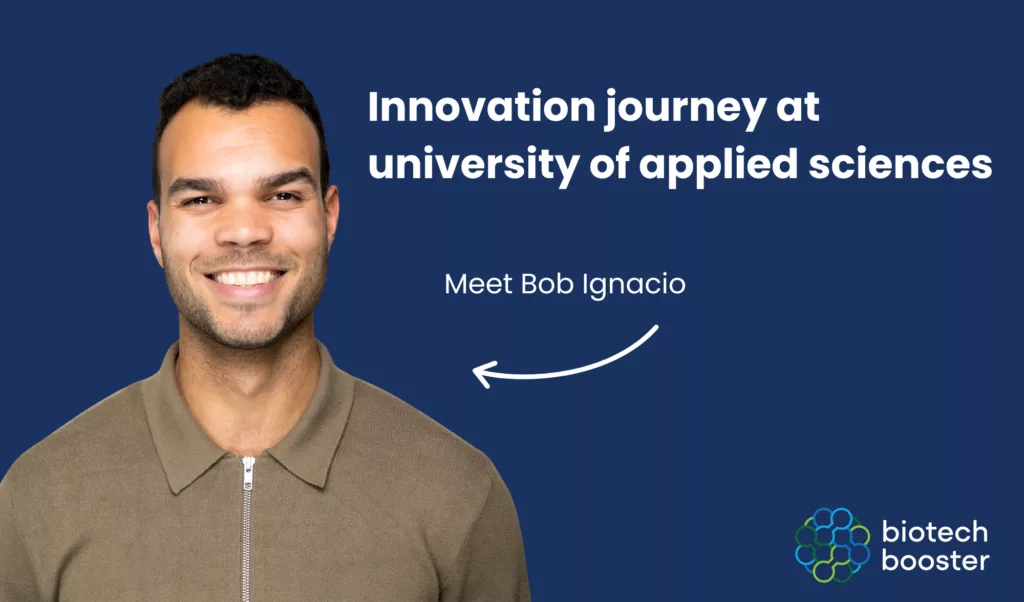

Impact Developers help researchers turn their ideas into innovations that impact society. They connect researchers with companies and other partners to explore how promising research can be put into practice.
In our Meet the Impact Developer series, we introduce the people behind this work at UAS and give them a chance to share their experiences, perspectives and ambitions.
Who are you, and what does your role look like in practice?
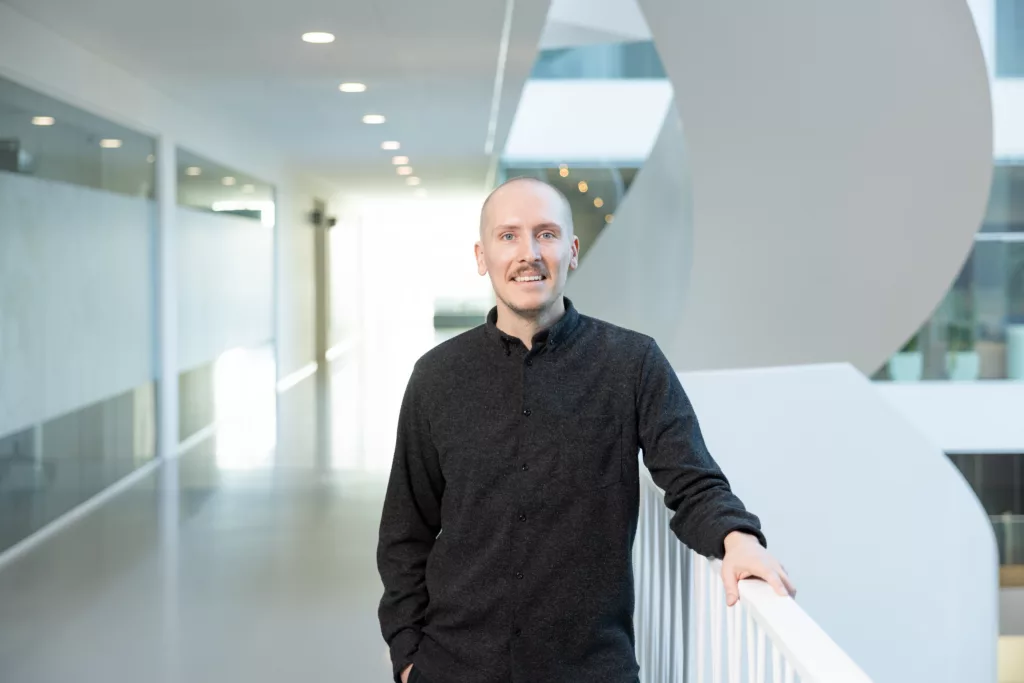
My name is Bob Ignacio, and I’m an Impact Developer at HAN University of Applied Sciences.
My work is quite varied. One part of my role focuses on valorization in industrial biotechnology (TC1). I talk to researchers at HAN and across the Netherlands about how their research could help address societal challenges and what it would take to turn those ideas into something useful. That means exploring which applications have the most potential, what still needs to be tested or developed, whether starting a business might be a good next step, and how to fund the process.
I also work with HAN colleagues who share my interest in turning research into societal impact. That might mean organizing a workshop on writing research proposals with impact in mind, or looking at how HAN can strengthen its support for researchers at an institutional level.
And while I work on industrial biotech within TC1, my interest in societal impact goes beyond any one field. I believe every researcher should have the opportunity to explore how their work can make a difference. If that’s something you’re interested in, feel free to reach out. I’m always happy to have a coffee and talk about it!
What inspires you most about working at a University of Applied Sciences?
What I really like about working at a University of Applied Sciences is how purpose-driven the research is. There’s a shared ambition to develop or demonstrate something that can make the world better.
I find that creates a great connection between me and the researchers I work with. We’re working towards the same goal, even if we each focus on a different part of the journey. Researchers bring their expertise, and I help explore how their work can make an impact beyond the research itself.
What makes innovation at a UAS different from other knowledge institutions?
Research at a UAS often involves working closely with societal partners, such as small and medium-sized enterprises and public institutions. These collaborations are sometimes even a requirement for research funding.
What I find valuable is that you bring different perspectives to the table from the very beginning. You hear from end-users, manufacturers, suppliers and regulators, for example. Their input helps you understand whether you’re addressing the right problem and whether the proposed solution will actually work in practice, including from a financial perspective. When that collaboration works well, you’re already thinking about how to put the results into practice while the research is still underway.
Can you share a project or moment that really stayed with you?
One project I’m a big fan of is Waste to Taste. The team developed a fermentation process to turn discarded tomatoes into a stable, tasty food product. For me, it’s a great example of how bringing the right partners together can lead to a solution that has real potential to be used in practice.
The project was coordinated by Keep Food Simple, a non-profit organization focused on making better use of food ingredients. They brought together HAN BioCentre, which developed the fermentation technology, Kramer Koolmeesters as a potential end-user, and Tuinbouw LLTB, which had connections to tomato-waste suppliers. This meant the team could explore the whole process, from sourcing the discarded tomatoes to developing the technology and creating the final product, with the relevant partners involved along the way.
What’s particularly impressive is how much the project achieved through a relatively small and short SIA KIEM grant. The combination of the right partners, strong research and genuine market interest made a real difference.
Just to be clear, I wasn’t involved in this project myself. I’m simply a fan of what the team achieved! If you’d like to learn more, follow HAN BioCentre on LinkedIn or get in touch with project leader Laura Claret Fernandez directly.
What is something people often misunderstand about your work?
First of all, I’m a HAN employee, although some of my other roles and responsibilities outside the institute might make that less obvious.
More importantly, my support isn’t limited to industrial biotech or a particular stage of research. I’m happy to work with any HAN researcher who wants to explore how their work could have a greater societal impact. It doesn’t matter whether you’re still developing an initial idea or have finished a research project several years ago. There may still be opportunities to take things further. I’m always happy to help researchers explore what those opportunities might look like.
Where do you see the biggest opportunity for UAS in the coming years?
I think one of the biggest opportunities is getting even better at bringing innovations into practice.
Universities of Applied Sciences are already developing promising solutions to some of society’s biggest challenges, from sustainability and human health to the built environment and public safety. But developing a good solution is only part of the story. To make a real difference, that solution needs to be adopted and implemented, which often means working with other organizations and people who can help make it happen.
There are ways to improve the chances of success, and I believe UAS have an opportunity to build on their existing strengths and become an important source of knowledge within the Dutch innovation ecosystem, not just on developing solutions, but also on getting them implemented.
What would you say to someone considering working with a UAS?
Go for it! Welcome on board, and let’s work together to increase the societal impact of research at Universities of Applied Sciences.