The question that started Plant Beams
For over ten years, David Fernández Rivas has worked on a technology that uses tiny, fast-moving liquid jets to inject substances into human skin without needles. Laser-made bubbles push microscopic droplets quickly enough to get through tissue, making this useful for things like drug delivery and vaccinations.
A few years ago, conversations between David and fellow researchers Tom and Pep, who brought expertise in plant science and robotics respectively, led to an interesting question: could the same needle-free injection technology be applied to plants? This became the basis of Biotech Booster project Plant Beams.
A gentler approach to genetic modification
It’s becoming more important to develop crops that can handle drought, disease, and changing conditions. Genetic modification is one option, but getting genetic material into plant cells is not easy. One technique that’s already in use is the gene gun. This involves the use of microscopic particles (usually gold) to deliver the genetic material into the plant tissue. It works, but it can damage the cells and gives very little control over where the material actually gets delivered.
Plant Beams is exploring a more precise alternative. By using high-speed liquid jets, the researchers hope to deliver genetic cargo, such as DNA or other materials used to modify cells, to specific parts of a plant while reducing damage to surrounding tissue.
One particularly interesting target is the meristem, a region containing actively dividing cells from which a plant grows. Successfully delivering genetic material there could potentially bypass some of the difficult regeneration steps normally involved in plant modification. The longer term aim is to help develop crops with useful traits (e.g. greater drought tolerance) and potentially pass those on to the next generation.
Using onions to understand the plant cell wall
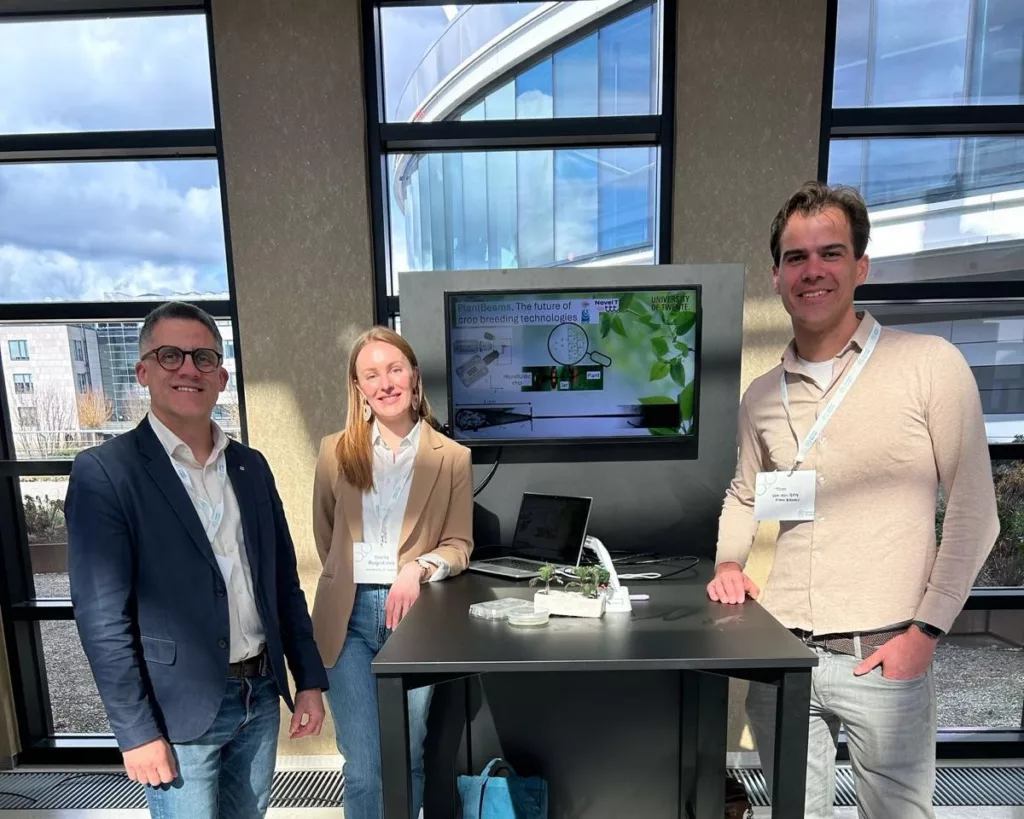
When Daria Bugakova joined Plant Beams as a postdoc in July 2025 it was the perfect mix of her interests in engineering and biology. Her interest in microfluidics (the manipulation of very small volumes of liquid) first arose during an Erasmus in Belgium, and she carried it into her PhD at the University of Twente. At Plant Beams, her work combines laboratory experiments, scientific writing, and conversations with potential partners. And lately, a considerable number of onions. “I buy the onion, I peel it off, I cry during the process,” she explains, describing how she prepares her experiments.
The supermarket staple helps researchers test whether the team’s technology can deliver material into plant cells. Unlike animal cells, plant cells have a rigid outer wall. This provides structure and protection, but it also makes delivering genetic material considerably more difficult. The hope is that understanding how to overcome the cell wall will eventually help the Plant Beams team apply the technology to crops such as corn or soybeans.
Being part of the Biotech Booster community
Plant Beams joined Biotech Booster in 2024, building on earlier research and funding. The program provided something particularly valuable at this stage: time. Biotech Booster’s two-year project timeline let the team dedicate consistent attention to the plant applications, with Daria working directly on the research.
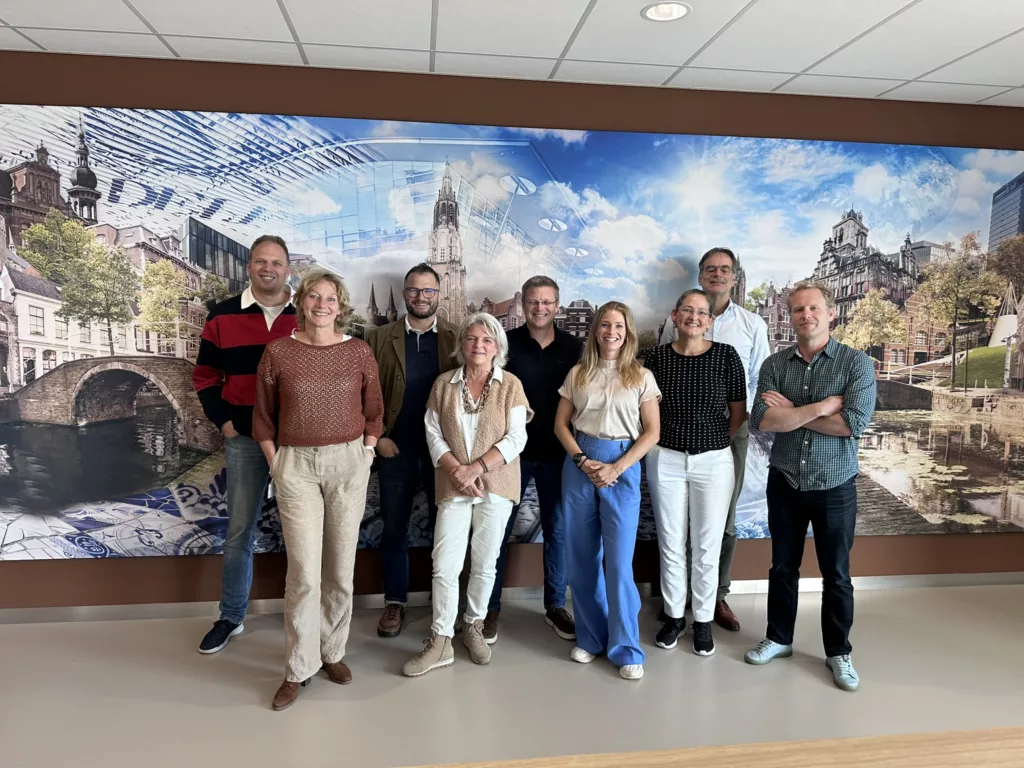
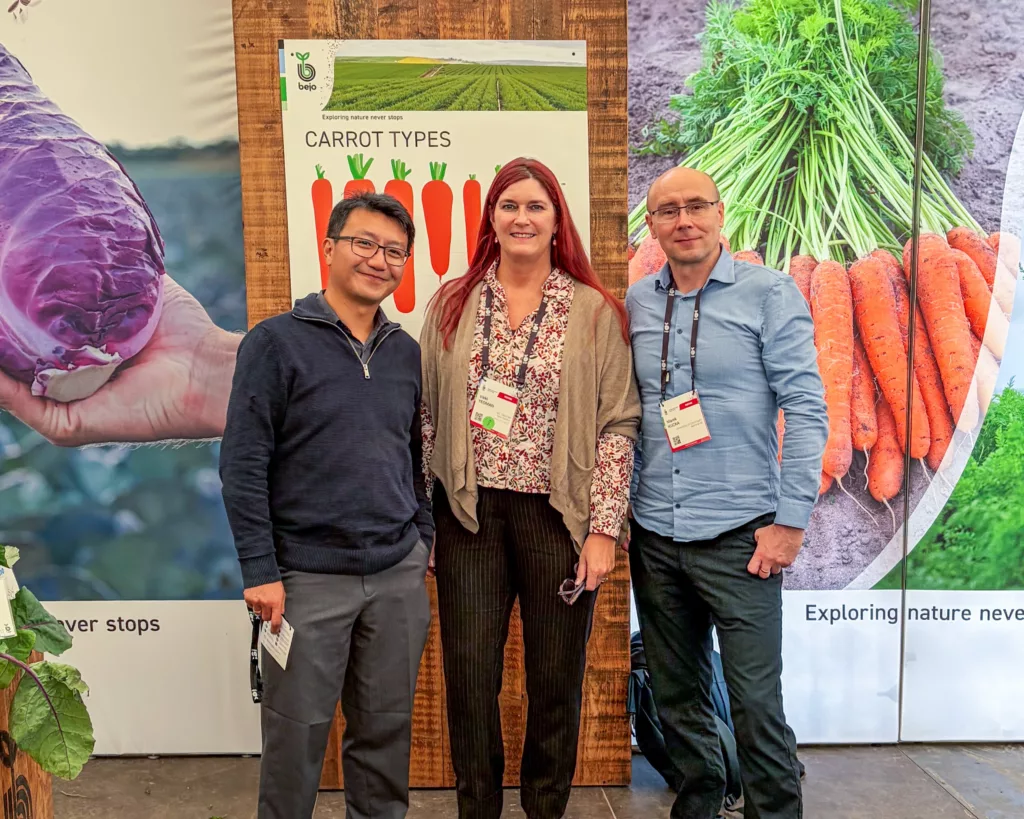
The program also connected the researchers with people beyond the lab. For example, through Biotech Booster events, the team made contact with a representative from the agricultural sector, opening the door to further conversations and collaboration. Alongside its existing research network, these connections are helping the team better understand where the technology might be useful.
For Daria, meeting potential collaborators can be just as motivating as making progress in the laboratory. After a recent visit to researchers in Venlo, she returned with new ideas to test and renewed enthusiasm for the project. Such conversations, she explains, reinforce the sense that what Plant Beams is developing is genuinely needed.
Beyond the laboratory
With the Biotech Booster project scheduled to conclude in March 2027, the researchers are considering what comes next. Daria has applied for further funding to continue the work and the team are looking at new partnerships and potential applications.
David is particularly interested in a future where the technology helps communities whose food production is increasingly threatened by changing growing conditions. He hopes not simply to create another agricultural technology, but to help people grow food where it is needed, particularly in regions of Africa and South America where local food production is under pressure.
But for David, it is not just about what the technology can achieve, but also who benefits. With large companies dominating much of the agricultural industry, he hopes innovations like Plant Beams can eventually reach smaller farmers, too. This ambition closely aligns with Biotech Booster’s mission: helping scientific discoveries develop into innovations that benefit society.
For now, the plant cell wall remains a stubborn opponent. But if a technology designed for human skin can one day help crops survive harsher conditions, those tears over the laboratory onions may have been worth it.
If you are interested in helping Plant Beams tackle global food security challenges, please reach out to
d.bugakova@utwente.nl or d.fernandezrivas@utwente.nl.