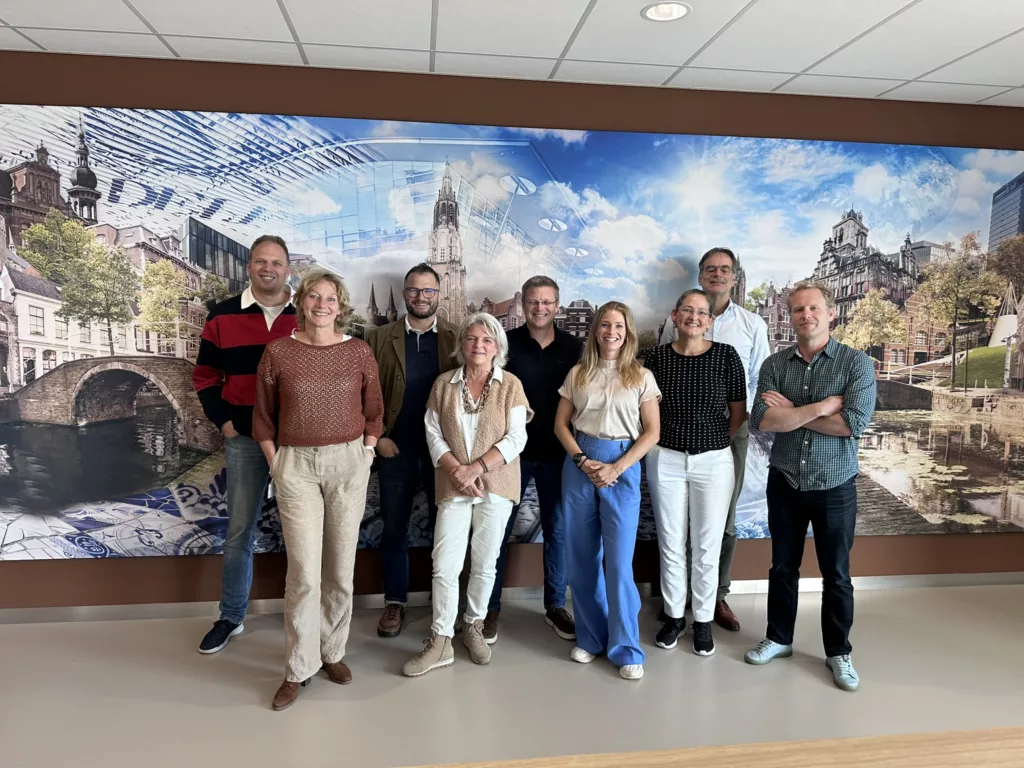
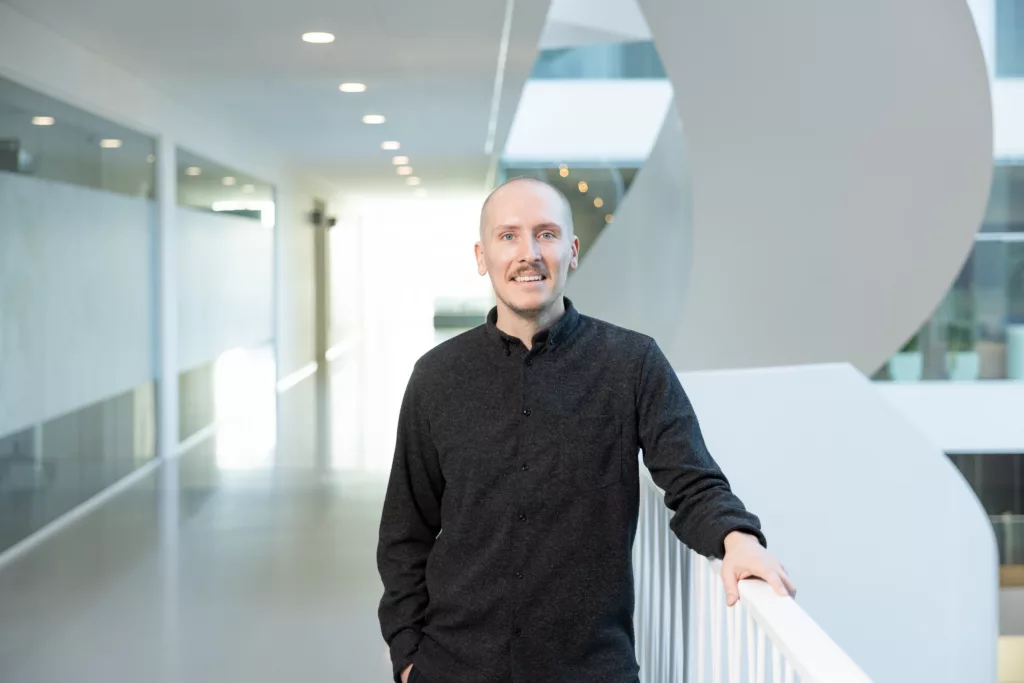
We interviewed Wim Velema, projectleader of Biotech Booster project SideroFORCE, which joined our program in 2025.
At sixteen, Wim liked chemistry and thought working for a pharmaceutical company sounded appealing. Making medicines seemed more useful than doing chemistry for its own sake. So he studied pharmaceutical sciences and eventually became a group leader researching new antibiotics.
“It’s one of the best jobs. I basically go to school every day.”
It’s easy to see why. His work gives him freedom to set his own agenda, solve scientific puzzles, and spend his days thinking about problems that do not yet have answers. One of those problems is becoming increasingly difficult to ignore: antibiotic resistance.
Antibiotics have given us a powerful way to treat bacterial infections. But bacteria have one rather inconvenient advantage. They are very, very good at making more of themselves. Some of the bacteria Wim works with can double in number roughly every 20 minutes. Start with a few million and, a few hours later, there can be billions. And in a population that large, random mutations are bound to occur. Occasionally, one of those mutations helps a bacterium survive an antibiotic. The antibiotic kills the others, while the survivors multiply again.
“There’s just nothing to be done about it. I think the only solution is that we just need to keep developing new and more types of antibiotics to keep up with them.”
SideroFORCE is Wim’s attempt to do exactly that. The problem starts with getting an antibiotic into a bacterium in the first place. Bacteria are surprisingly selective about what they let inside. The molecules Wim and his team are working with are much larger than conventional antibiotics, making the journey through the bacterial cell wall even harder. So the researchers decided not to force their way in. They would trick the bacteria into letting them through.
Bacteria need iron to survive, and they have sophisticated transport systems for collecting it from their surroundings. Wim’s team attaches an artificial iron-binding molecule to their antibiotic. The bacterium recognizes the iron-like structure and pulls it inside. Once inside, SideroFORCE takes a different approach from conventional antibiotics. Instead of targeting a protein directly, it targets the genetic instructions used to make an essential bacterial protein. The idea is to stop the bacterium from producing something it needs to survive. It is a complicated way of doing something rather simple: getting the bacteria to stop making one of the things that keeps them alive.
During Wim’s PhD, he saw another researcher present the iron-transport approach at a conference. The idea stayed somewhere in the back of his mind. Years later, when he started working with these large antibiotic molecules, he remembered it. What began as a small side project about four years ago has since grown into a larger research effort. And perhaps the biggest surprise was that it worked.
The team initially thought getting such large molecules inside bacteria using this method might be a long shot. Instead, the first experiments produced promising results. They repeated the experiments with different controls, and the evidence kept pointing in the same direction. The eventual ambition is not to replace every antibiotic. It is about expanding our options when existing antibiotics fall short.
Working with Biotech Booster has also added a different side to the project. Wim mainly comes from the scientific world, while Frits Mattijssen, the business developer working with them, brings the business perspective. Together, they are starting to look beyond whether the science works: could this eventually become something useful, developable, and worth taking further? For Wim, that business side is still new territory, but also one of the interesting parts of the journey.
For now, the team has another year to see how far their idea can go. If the next generation of molecules performs, the project could take its next step towards development and, eventually, human testing.
And SideroFORCE? The name is almost as literal as the idea. Siderophore is the name for the molecules bacteria use to capture iron. Add “force”, and you have SideroFORCE: a little bit of iron, a little bit of deception, and hopefully enough force to keep bacteria from getting the last word.