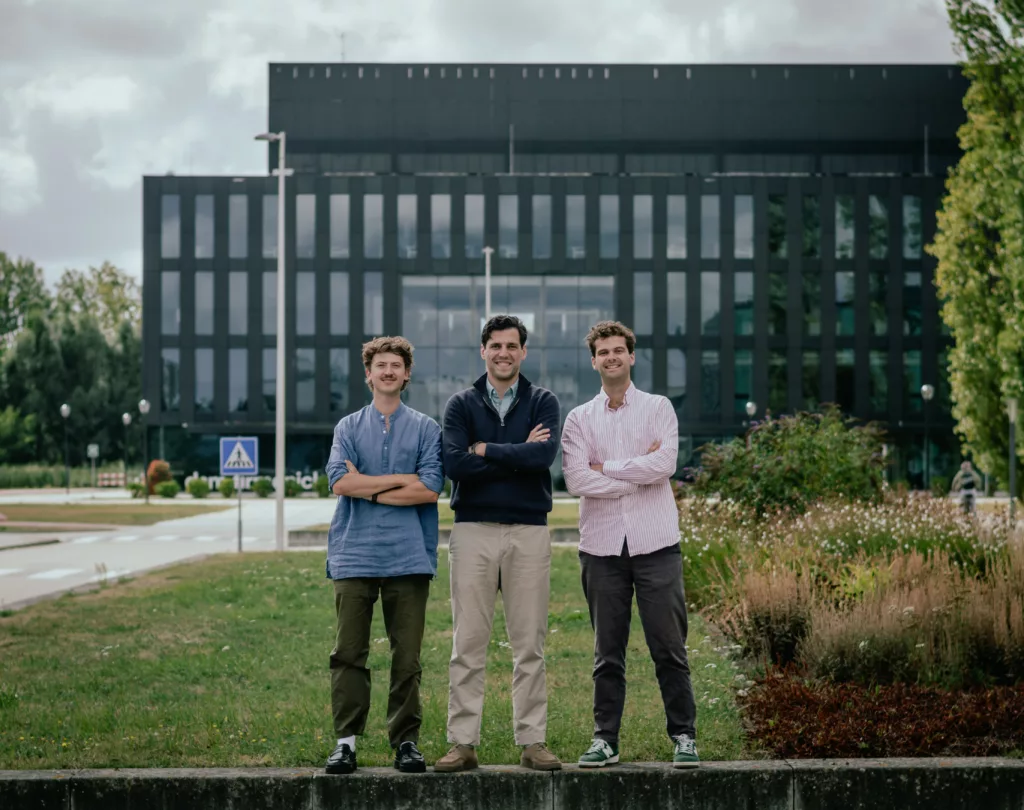
With his project tRNA for CMT, Erik and his team are currently part of the Biotech Booster program and are taking next steps to develop a novel gene therapy that directly targets the root cause of CMT2D.
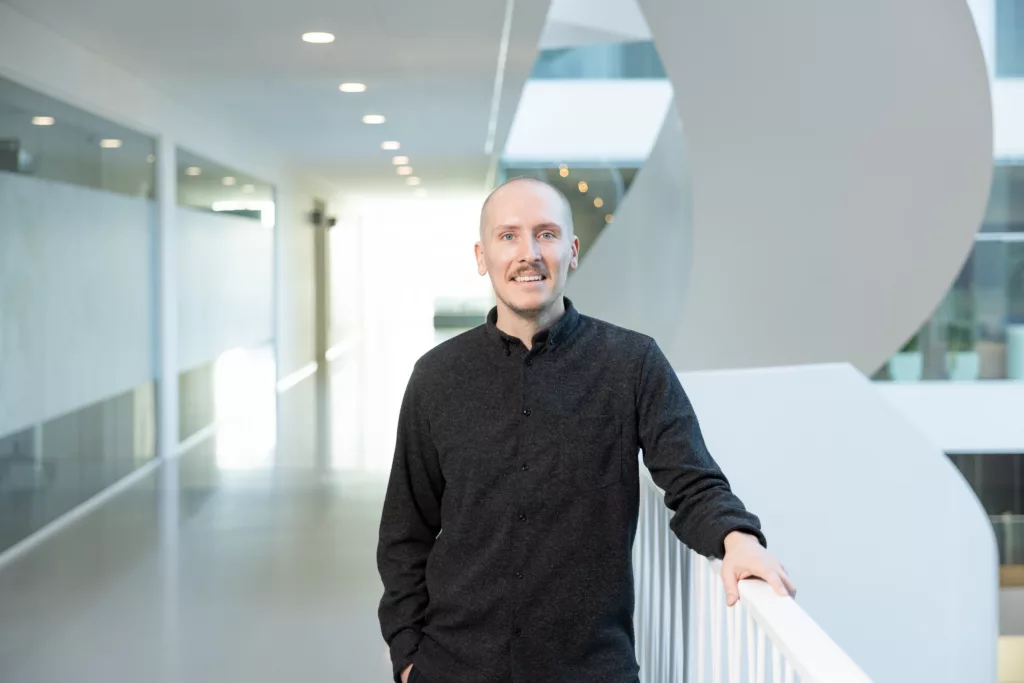
For Erik Storkebaum, a scientific career can start with a simple question: why? Originally from Belgium, Erik has spent the past two decades trying to understand why motor neurons degenerate in neurodegenerative diseases, from his early research in Leuven and Münster to his current work in Nijmegen. Today, he combines research, teaching and scientific leadership as Scientific Director of the Donders Center for Neuroscience at Radboud University.
One question in particular has kept him busy for years: why do certain genetic mutations cause peripheral nerves to gradually break down, while the rest of the body continues to function normally? What started as a curiosity-driven research question has taken him through several labs and has now grown into a potential gene therapy for CMT2D.
For Erik, that curiosity is still at the heart of what he does.
“Deep down, I am passionate about science. I am really a scientist. I feel that I never worked in my life, I am glad to do my hobby.”
The effects of the disease
CMT affects around one in 2,500 people, although the specific genetic mutations the team is working on are much rarer. The disease affects the nerves that control muscles and sensation. The feet and hands are primarily affected, and the symptoms become gradually more severe over time.
Weakening muscles can lead to so-called drop foot, hammer toes and claw hands. People can develop a characteristic “steppage gait”, lifting their legs higher because they can no longer properly lift their feet. Later, even everyday tasks such as picking up objects can become difficult. Some patients require corrective surgery every few years, and some become wheelchair users.
This disease places an enormous emotional burden on patients and their families. As symptoms progress, individuals often see their professional opportunities decrease and face daily challenges caused by impaired mobility.
The progressive and unpredictable nature of the disease creates constant uncertainty about what changes to their body may come ahead, how difficult it will become, and when they may occur. Families must also cope with the knowledge that this is a hereditary condition, typically carrying a 50% risk of transmission to each child. And currently, there is no effective treatment that tackles the underlying cause of CMT.
Meet the tRNA experts
tRNA is one of the many types of RNA found in our cells. The team’s approach is to use gene therapy to increase the amount of a specific tRNA in cells, aiming to restore the process that goes wrong in CMT2D.
It sounds complicated. The basic idea is simple: give the cells more of something they need to function properly.
Maria Landinez, who joined Erik’s lab as a postdoc and is now the company’s Scientific Director, carried out many of the first experiments in mouse models.
The effect in the mice is striking enough to make a scientist stop and take notice. “The therapeutic effect in mouse models is clear and strong,” Maria says. “The biology is there. If we manage to deliver this therapy to neurons in patients, in the same way as in mice, it should work.”
From mice to people
The team is now working on the next steps: finding the right delivery system, dosage, and partners to eventually bring the therapy to humans. Clinical trials are still some way off, and there are plenty of questions to answer first.
For example: when should the therapy be given? Ideally, you might treat someone before symptoms appear. But because the age at which CMT2D develops can vary dramatically, giving a gene therapy to someone as a newborn who might not develop symptoms until decades later is a very different proposition.
That is why the team is already thinking beyond the laboratory. They are working with clinicians who are performing natural history studies and setting up patient registries, while planning conversations with patient organizations and families.
And patients are already making their voices heard. When Erik spoke to a patient about the possibility of reversing symptoms, the conversation became emotional. For someone living with CMT, the idea that the disease might one day be reversible is more than an interesting scientific result.
Science meets business
For Erik, this is where the Biotech Booster journey has changed his perspective most.
“It is fascinating. Being part of the Biotech Booster program makes you look at things from a completely different perspective. I now also realize that translating a therapeutic approach to human application is much more complicated than anticipated.”
That’s where Frits Mattijssen comes in. The project’s business developer knew molecular biology and gene therapy, but not CMT. His job is now partly to make sure the project meets the right people and, crucially, keeps finding money.
That may be the less glamorous side of biotech, but it is a reality the team has quickly learned. Grants can fund the next experiments, but they run out quickly. The team is already preparing for a next funding step, including an application for Biotech Booster Level 2.
Frits also has another job: occasionally reminding scientists that there is such a thing as enough data.
“There is always a desire to do more science, to understand more about how it works,” he says. “But at some point, you have to say: this is what we have, and now we need to move ahead.”
And on the harder days, Maria says, it is often the people around her who keep things moving.
“Let’s have a coffee, make jokes about the situation and cheer each other up. If you think about the things we are doing, the technical advances, it’s all very sophisticated.”
Compared with ten years ago, she says, the field has moved far beyond the “baby steps” of the past. “Now so much more is possible, and it’s very remarkable.”
Planting seeds
That also explains why Frits values the Biotech Booster network so much. One meeting might not lead to anything immediately. Neither might the next five.
But people remember.
“You have to convey the message of what you’re doing,” he says. “At some point, you need to be lucky enough that there’s someone at an investment company you spoke to five years ago who thinks: Oh, I’ve seen this before. This is cool.”
For a project that could still need years and substantial funding before reaching clinical trials, that long-term network matters. And as Frits puts it, “Be persistent, and a bit of luck is what is needed. Programs like Biotech Booster are really important.”
And the team has a particularly clear ambition for what they want to be known for: tRNA.
“There are many different types of RNA,” Maria explains. “And the one that we work with, tRNA, is very special. As far as we know, we are the only ones in Europe working with tRNAs in this way – we want to become the leading tRNA therapeutics company in Europe.”
It started with a side project. The science has now made it from flies to mice. The next challenge is considerably bigger: getting from mice to people.
If you are an investor, potential partner, or know someone who could help move the therapy from mice towards patients, the team would be happy to hear from you. Get in touch with Erik at erik.storkebaum@donders.ru.nl.