
Finished, but not yet done.
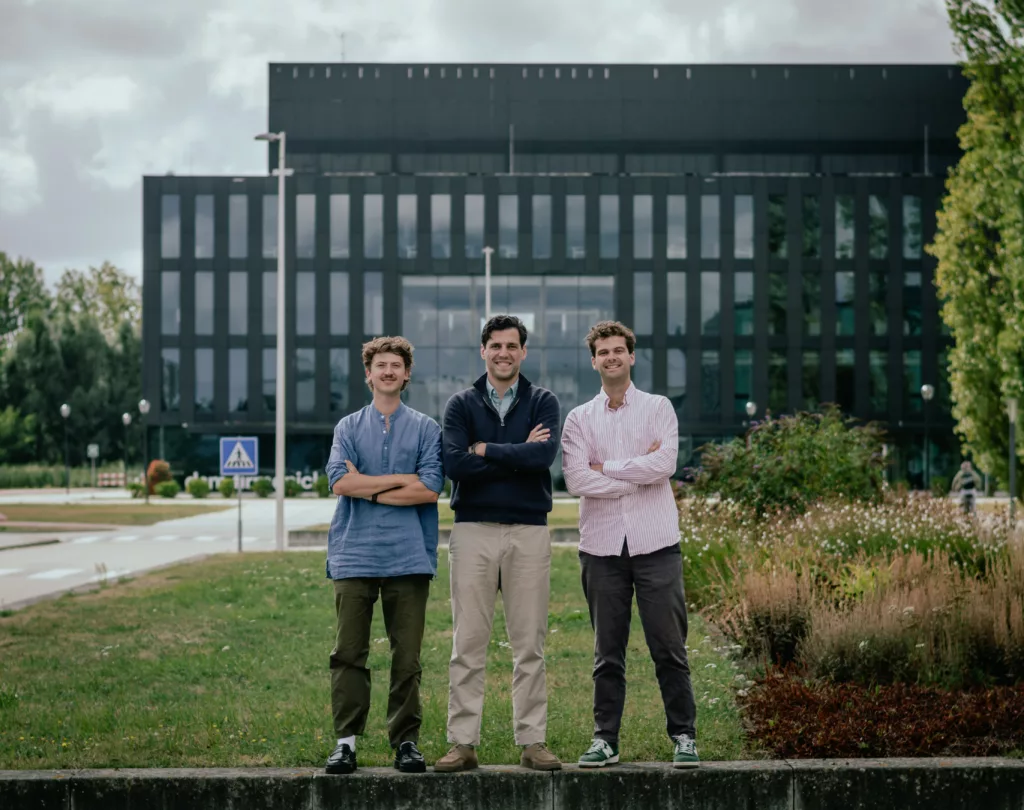
That sounds like a contradiction. But for Pim Schaasberg, CEO of ProteoT, it is exactly what becoming a Biotech Booster alumni means.
ProteoT joined Biotech Booster in 2024, and two years later, the official project has come to an end. But the company is far from finished. The team is now focused on validating product-market fit, securing its first customers, and working towards its first recurring sales by summer 2027.
ProteoT was also one of the first projects to join Biotech Booster, and Pim has been there from the beginning, including every annual event. So who better to kick off our very first alumni column?
And luckily, Pim is not planning to disappear now that the program has ended.
“I would not want to detach myself from Biotech Booster, but would love to stay involved.”
How ProteoT advances the UN’s goals
Before we get to what happened during those two years, what exactly does ProteoT do?
In short, they want to make food safety testing faster and more flexible. Their software works with existing laboratory hardware to detect multiple targets at once, rather than looking for just one thing at a time. This can help food producers with their own R&D, including novel food applications, while laboratories can use it to detect and distinguish allergens, pathogens, fungi and other biological components more efficiently.
The ambition is to become a new analytical standard for food safety, helping us know more about what is actually in our food, from farm to fork.
For Pim, the motivation is personal. He has a background in wastewater research and a passion for clean water and safe food for everyone.
Food safety might not always feel like an urgent problem in the Netherlands, but recalls still happen around 100–130 times a year. The costs can run into hundreds of thousands, sometimes millions, of euros. And the damage doesn’t stop at the product itself: consumer trust and a brand’s reputation can take a hit too. Globally, the challenge is even bigger: 1 in 9 people suffers from foodborne illness each year, while climate change is putting additional pressure on an already complex food chain.
By making food safety testing faster and more reliable, ProteoT contributes to UN Sustainable Development Goals 2, 3 and 12: Zero Hunger, Good Health and Well-being, and Responsible Consumption and Production. In doing so, the company aims to support a food system that is not only safer, but also more sustainable.
Best of both worlds
When ProteoT joined Biotech Booster, they did not quite fit into one box. Their roots are at TU Delft, but their technology has applications in both Industrial Biotechnology and Agrifood. So ProteoT became part of both Thematic Cluster 1 and Thematic Cluster 2.
At first, Pim describes this as feeling a little like being the “ugly duckling.”
But perhaps being the odd one out has its advantages.
“You can call it an ugly duckling, or you can call it the best of both worlds. You have two different kinds of Business Developers at your disposal. You have double the network, double the people working with you and thinking along.”
Trial and error
ProteoT joined Biotech Booster early. Very early. Which meant they were not only developing their company, they were also navigating a program that was still developing itself.
“We were growing when Biotech Booster was also still growing. Oftentimes it felt a little bit like we were the guinea pig.”
There was trial and error on both sides. Some processes were not always clear, and sometimes things simply took longer than expected.
But Pim doesn’t see that as a reason to look back negatively.
“Because we were all doing things for the first time, there was still some trial and error. But I am very grateful to have been part of that first batch of projects to join.”
The value of the program
For Pim, the value of Biotech Booster was not just the funding. It was what the funding allowed them to do, combined with the people around it.
“Biotech Booster is an incredibly useful network.”
The funding gave ProteoT room to validate their technology. The workshops, roundtables, events and Business Developers gave them people to challenge their ideas, open doors and help them figure out where to go next.
For a startup, that can make the difference between having a promising technology and actually finding out whether someone will use it.
And that is exactly what ProteoT has been working towards: demos, pilots, letters of intent, and eventually sales.
So, what does an alumni project look like?
Quite different from when the project started in 2024.
ProteoT now has its own company, its first office at Planet B.io, a growing team, with a CTO and fractional CCO attracted and several advisors. Martin Pabst, the scientific co-founder who developed the original IP, will continue as scientific advisor.
The team is also running several pilot projects, including work in horticulture where they are distinguishing fungi from one another. The aim is to help make treatment more targeted and potentially reduce pesticide use.
They have also secured an NWO Take-off Phase 2 loan, giving them another 1.5 years to continue validating both their technology and business model.
And then comes the big one: sales.
“We’re going to make mistakes. We’re going to validate and throw out a very first bad sales contract, but we’ll be super happy with our first sales. And then we iterate.”
The goal is to reach recurring sales around summer 2027.
Still not done
Looking back, Pim is genuinely surprised by how far the team has come.
“If you had told me I would have all this before I started the Biotech Booster Level 1, I would be thrilled, over the moon with this team expansion, new office and first projects run.”
Pim sees himself continuing his role in the Biotech Booster community: sharing lessons, speaking at events and helping new founders navigate their own journeys.
Perhaps that is the real transition from project to alumni: moving from asking “could this work?” to showing that it does.
Know a food-producing company or contract research food laboratory that should meet ProteoT? Connect them with Pim at p.schaasberg@proteot.com.