
“Humans create a lot of waste. We are the only species in the world that create so much persistent waste and do not reuse it. Ever since my school years, I have wanted to find ways to transform waste into something useful and valuable.”
— Ali Elahinik
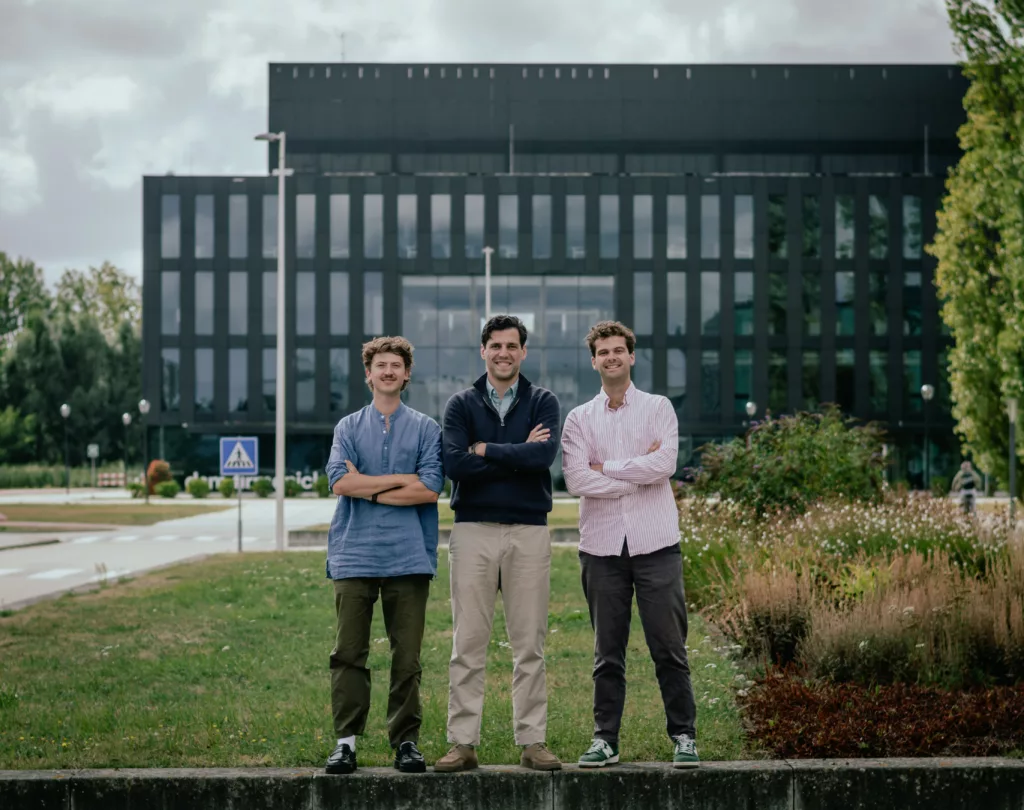
The Biotech Booster team sat down with Ali Elahinik and Sirous Ebrahimi to discuss their company BioFire, the challenges they are facing, and the bigger dream behind their project: not only creating impact with their innovation, but also showing that good ideas can move from academia to industry faster.
Ali Elahinik is co-founder and CEO of BioFire, a Biotech Booster project that joined the program in 2025. BioFire uses wastewater sludge to produce a sustainable flame-retardant material. While the technology itself is promising, the journey from idea to market is not always straightforward.
For Ali and Sirous, BioFire’s journey highlights a much bigger challenge that extends beyond their own company: how do we give promising biotech innovations enough time, funding and support to actually reach the market?
Turning waste into something useful
Wastewater sludge is a costly waste to manage. Even when utilities recover biogas from it, the revenue rarely covers the full cost of treatment and disposal. This remains a major challenge for utilities worldwide.
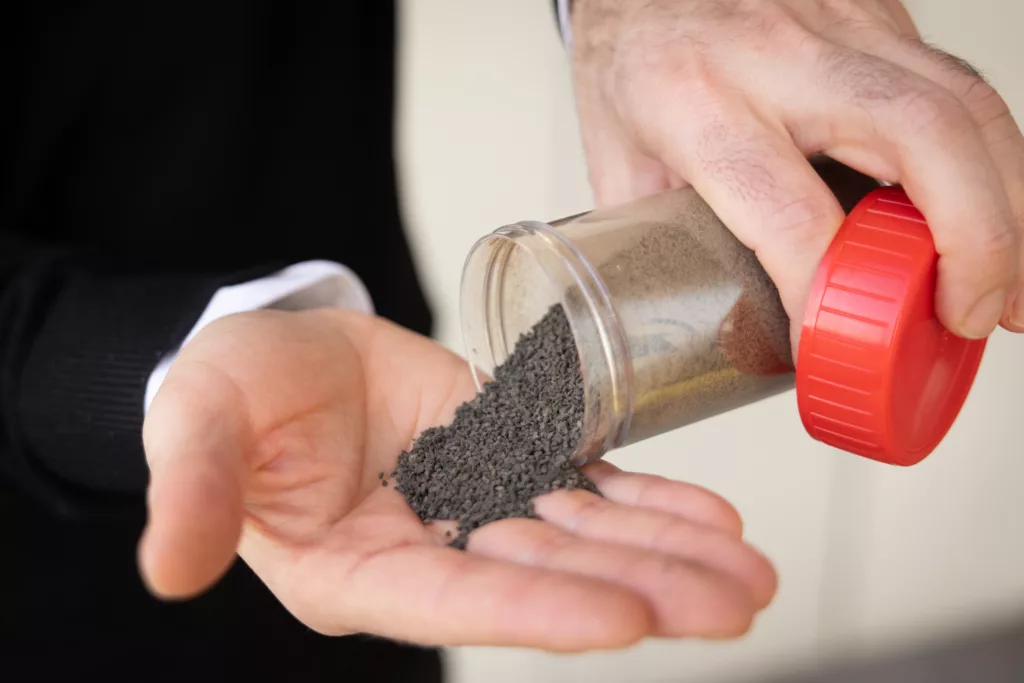
BioFire saw an opportunity in this waste stream. The team discovered they could extract a biopolymer from sludge and achieve acceptable yields. They are now working to develop this into a sustainable flame-retardant material that could be used in products such as natural-fiber composites, which have applications in construction, transport, electronics, and beyond.
The technology still needs further R&D before it can become a commercial product, and the team is initiating the pilot phase in September 2026.
A team built around a shared ambition
“What BioFire is about, besides making a novel flame retardant and first-of-a-kind production line, is that we are creating a team, an environment where smart, like-minded, and ambitious people can sit in a room and work on a focused challenge,” Ali said.
The team currently consists of Ali, Sirous and three interns, forming a strong and motivated team, supported by a network of experienced entrepreneurs and experts from the Biotech Booster network.
Ali feels fortunate to have met Sirous, whose expertise in biotechnology he greatly admires. Both originally from Iran and sharing similar interests, they first met by chance during the second year of Ali’s PhD. Years later, when Ali conceived the idea of BioFire, Sirous was the first person he approached. Sirous’ complementary expertise makes him an ideal co-founder, Ali notes.
If it doesn’t exist, create it yourself
Sirous brings a very different kind of experience to the team. His journey in biotech has taken him from Iran to Switzerland and now to TU Delft. He is the kind of person who, when others see something as impossible, is willing to take it on himself and find a way forward. His philosophy is simple: if something is necessary but does not yet exist, create it yourself.
A good example is his role as a professor at Tabriz University of Technology in Iran. He was responsible for research in biotechnology, but there was no existing biotech center. So he established one himself.
When funding became a problem, he designed and partly funded thirty-five bioreactors. After two years, he had an equipped lab where he supervised over seventy master’s students and ten PhD students.
Sirous had always been interested in practical projects where he could develop ideas at the pilot scale and then take them to full scale.
“In Iran, this took me a few years to get an idea to the market. Unfortunately, the same idea in the Netherlands can take 10–15 years, due to heavy regulations which slow down progress.”
In 2017, he decided to move to the Netherlands to develop his skills in metabolic engineering. When he saw a project with a practical application, he decided to help Ali develop the idea to the next stage. He hopes BioFire can become a good example of how speed can be enhanced and become a symbol for other start-ups.
“If you don’t test it, you will never go to the next step. It’s good to take small risks. Freedom and a small fund to test ideas and be creative would already make a very big difference.”
That mindset has also helped BioFire move quickly. Sirous designed and sourced the pilot himself, which sped up the process and proved to be incredibly cost-effective.
Why do good ideas take so long?
The BioFire team knows from experience that moving from the lab to the market is not simply about having good technology. The journey involves years of development, significant uncertainty and, importantly, a funding gap before technology is commercially ready.
For Ali, this is where programs such as Biotech Booster and Faculty of Impact become important. They help bridge the gap between academic research and a commercial product: a stage when an innovation requires further development beyond the common scope of universities yet remains too early and risky to attract private investment.
“Biotech Booster has provided funding, which is really important, but for BioFire, the network and expertise have been just as valuable. The business developers assigned to the project have become an important part of the team”, Ali says. “ I speak with them at least a couple of times a week.”
The team also participated in the Industrial Biotech Bootcamp, organized by Biotech Booster and Planet B.io, where BioFire came in first place.
For Ali, the support is therefore not only about money. It is about having access to people who have walked the same path, who understand the industry, and having someone to turn to when you don’t know what the next step should be.
From lab to industry
BioFire is actively working on both sides of its value chain. On one side are the raw material suppliers, the water boards and utilities that provide their feedstock. On the other side are the industrial partners that will formulate and apply BioFire’s product.
“And we are in between. It’s been a learning experience to understand the needs of both sides and finding ways to connect them.”
The next major milestone is getting the pilot facility operational. But the team is also thinking beyond BioFire. They hope they can eventually use the experience gained from commercializing this technology to bring other promising biotechnology innovations from the lab into practical, full-scale applications.
Creating impact that lasts
For Ali, the impact BioFire wants to create goes beyond developing a novel flame retardant and solving a waste problem. It is also about creating an environment where underutilized talent can contribute to solving complex environmental challenges, while generating meaningful employment and strengthening Dutch society and the economy. Finding a balance between ambition and reality is important. BioFire wants to create measurable environmental value, but it also needs to make economic sense if it is going to have a lasting impact.
For Ali and Sirous, that is ultimately what Biotech Ideas Out of the Lab, Fast Into Real-world Execution means: creating a team and the conditions for biotech ideas to reach the market at a faster turnover.
And there are still people they would like to meet along the way.
“We’re looking to talk to people who have built first of a kind biotech factories, who are making products from complex biological streams. Also, we are always interested in talking to investors and people who understand our industry and want to support us.”
If you can help BioFire on that journey, they would love to hear from you.