In this series “Meet the people behind Biotech Booster” we introduce you to the passionate people who are involved in our mission.
A big part of our team consists of Biotech Booster business- and impact developers. They operate on a national level within five distinct Thematic Clusters (TC’s) that each represent specific biotech focus areas. Our business- and impact developers collaborate nationally on a daily basis to identify early stage high-potential biotechnology findings. They guide scientists and aspiring entrepreneurs in their journey to transform their ideas into successful biotech businesses so that biotechnology findings have faster positive impact on society.
Name
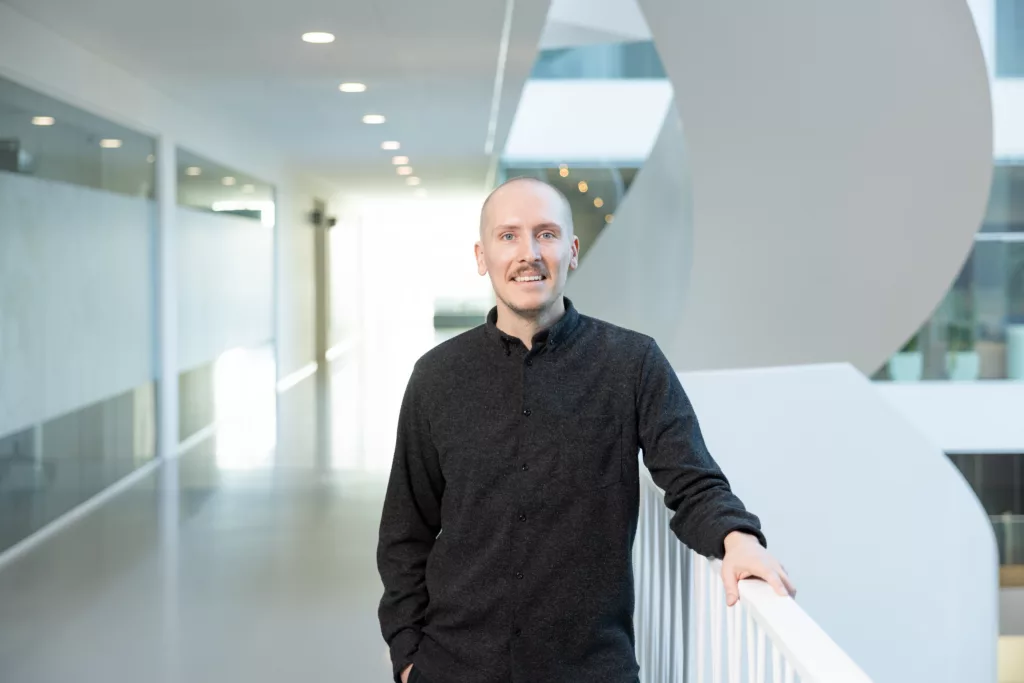
Frits Mattijssen
What is your role within Biotech Booster?
I am a Business Developer in Thematic Cluster 5: Vaccines, Small Molecules, Discovery & Development platforms
Can you describe your role in a nutshell?
I help project teams prepare to apply for Level 1 funding and have been part of several teams that received it. As an in-house business developer, I support projects from start to finish and sometimes even after. I also connect people: scientists, entrepreneurs, service providers, investors, and others, to encourage collaboration.
What motivated you to join Biotech Booster’s mission?
I think success in biotech is often less about having the most innovative idea and more about meeting the right people at the right time. My strength is connecting people. Besides offering financial support, I believe what really sets Biotech Booster apart is helping entrepreneurs find the right networks and connect with key people when it matters most.
What do you love most about your role?
I really appreciate talking with other business and impact developers. These conversations help us learn from one another and work together more effectively. I’ve been with Biotech Booster since the beginning, and at first, I wasn’t sure how working with other knowledge institutions would go. Looking back over the past two years, I’m pleased to see the significant progress we’ve made and the eagerness of everyone to help one another.
What are your ambitions and what do you hope to achieve in the coming years?
My goal is to become a key part of an entrepreneurial team. Rather than just supporting from the outside as I do now, I want to become an entrepreneur myself, take on risks, show commitment, and work hard to reach new milestones.
If you had a few million to invest in biotech, what type of company would you start yourself or in which company would you invest and why?
That is indeed a challenging question. Admittedly, and this may seem unconventional, I believe that in several therapeutic areas we have reached a plateau regarding the extent to which new treatments can improve patient outcomes, particularly in the field of cardiovascular disease. Furthermore, the reimbursement of novel therapies has become increasingly difficult, as regulatory and governing bodies are, quite justifiably, highly critical of the incremental benefits these treatments provide relative to their associated costs. For this reason, I am a strong proponent of preventive medicine. I am especially interested in exploring and investing in business models that focus on the commercialization of preventive approaches to disease, rather than exclusively pursuing curative solutions.
If you could have dinner with any scientist, living or dead, who would it be, what would you ask them and why?
I sort of accidentally ended up as a scientist myself, and I definitely do not have particular examples or scientific role models that I would identify as personal inspirations; instead, I would prefer to spend my time engaging in conversation with fellow TC colleagues over a coffee.