In this series “Meet the people behind Biotech Booster” we introduce you to the passionate people who are involved in our mission.
First up are our Thematic Cluster managers. What is a Thematic Cluster, you ask? Biotech Booster operates on a national level through five distinct Thematic Clusters (TC’s) that each represent specific biotech focus areas. They are TC 1: Industrial Biotechnology & Production, TC 2: AgroFood biotechnology, and TC 3, 4 and 5: Human health, diagnostics, therapeutics. Within these clusters – or communities – we bring together knowledge institutes, companies and other organizations from all over the country to closely collaborate and learn from each other in a unique way. With one collective purpose in mind: to accelerate the commercialization of biotech findings.
What’s your name?
Cornelis Mijnders
What is your role within Biotech Booster?
I am a Thematic Cluster Manager at Biotech Booster, for TC 1: Industrial Biotechnology & Production.
Can you shortly describe your role?
As the Thematic Cluster Manager for Industrial Production, I oversee the development of biotech business cases. My team and I work closely with universities, applied universities, SMEs, and startups to identify promising projects and provide them with the necessary support to reach the market.
Who’s in your team?
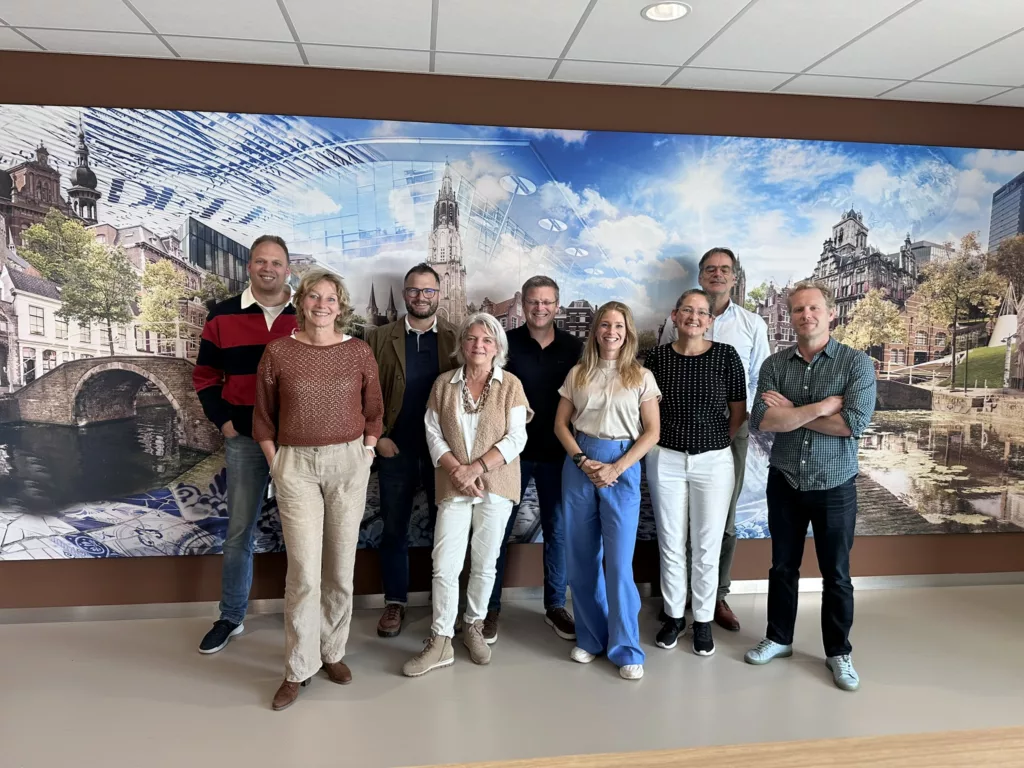
I’m happy to be working with a lovely team of people who are spread over multiple Dutch knowledge institutes:
Agon Kokaljari, Stichting Hogeschool Van Hall Larenstein
Ronja Wabeke, Rijksuniversiteit Groningen
Nikita Sajeev, Wageningen University
Dorus Velema, TU Delft
Baukje Sikkema, TU Delft
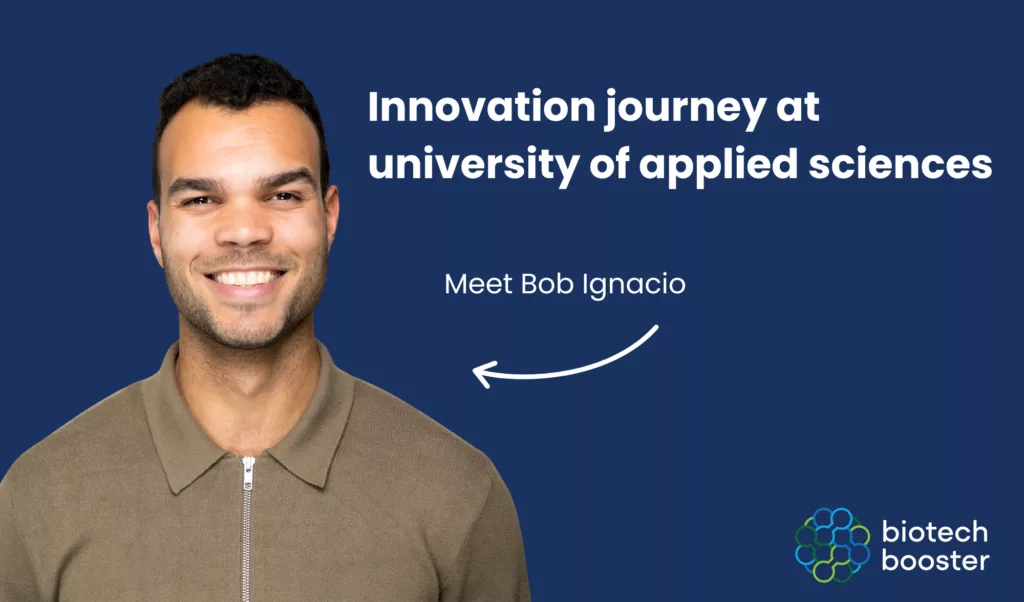
Bob Ignacio, HAN University of Applied Sciences
Article continues below the picture

What motivated you to join Biotech Booster’s mission?
The believe that biotechnology can help create a better and more sustainable world. Biomass in whatever form (sugar, proteins etc. from plants) is everywhere. The process of fermentation can be done even in space. So it is a very democratic technology in that sense and relatively easy accessible by all countries. Way more than the monopoly of the dark liquid oil that is only ‘owned’ by a few majors and some countries we are relying on.
What is, in your opinion, an obstacle in bringing biotechnology ideas and innovations to the market?
One of the biggest challenges in commercializing biotech innovations is competing with established, well-organized value chains, particularly in industries like industrial production. Fossil fuels have a long history and have become deeply integrated into our economy, making it difficult to replace with new, biotech-based alternatives. Bringing novel chemicals to the market for example is extremely hard. Fossil oil has, over the past million years, been able to become a highly energy dense feedstock. And so has the fossil value chain that has been developed for decades. Materials like PET, nylon, PFAS and other fossil based polymers have very nice properties. A raincoat using PFAS will keep you dry and will last for a while.
You’ve been involved in Biotech Booster since early on. What are you most proud of? And what do you hope to achieve in the coming years?
I’m most proud of the increased collaboration between universities and applied universities fostered by the Thematic Clusters. Initiatives like the support for Carapace and the AVANS-TU/e project demonstrate the potential of cross-institutional partnerships. I hope to see even stronger collaboration in the future, recognizing that the Netherlands can only compete globally by working together.
If you had a few million to invest in biotech, what type of company would you start yourself or in which company would you invest and why?
While the food space is exciting, I’m intrigued by the potential of less high-tech alternatives compared to cultivated meat for example. I would love to invest a couple of million in the development of a diverse range of mushrooms, that could offer a compelling option for consumers looking to reduce their meat consumption. By offering variety and appealing textures and flavors, mushrooms could become a popular and sustainable food choice.
If you could have dinner with any scientist, living or dead, who would it be and what would you ask them?
Again difficult question, but that would be Louise Fresco. She is very inspiring. She has written a number of books. I read her book De plantenjager uit Leningrad, recently, highly inspiring to read. Showing the passion of a scientist that despite all setbacks believes in his work and achieves great things. My question to her would be: what major societal breakthroughs or positive changes do you foresee in the coming decades? I am a strong believer in technology, however changes are often not driven by technological advancements only. That’s why I would ask this question😊.
Curious about the rest of the people behind Biotech Booster? Keep an eye out on our LinkedIn page to stay up-to-date!