Project

Haplotagging

Food security and climate change are two of the greatest challenges facing humanity. With shrinking farmland and a growing population, we need Smart Breeding technologies: technologies that accelerate the creation of crop varieties that increase yield, resist disease, and tolerate heat and drought. Today, many bottlenecks exist to make Smart Breeding affordable only to the largest breeders and staple crops.

Our solution is haplotagging, a new DNA sequencing method built around microbeads. It simplifies complex lab work into a single, easy-to-use reagent, and adds valuable “haplotype” context to the sequence. This extra information improves accuracy, uncovers more variation, and, when combined with advanced analytics, enables Smart Breeding across all crops, including wild varieties, while cutting both cost and development time.

Haplotagging can overcome the current bottlenecks, allowing breeders to grow more food on less land, manage climate risks, preserve genetic diversity, and expand crop options. By democratizing Smart Breeding, we help commercial breeders, both large and small, many of which are based in the Netherlands, to maintain leadership in high-tech farming. In this project, our first step is to partner with leading and mid-size growers to apply haplotagging in breeding, genome profiling, and new variety development, while building market insight and a strong business case for scaling this innovation.

Project team

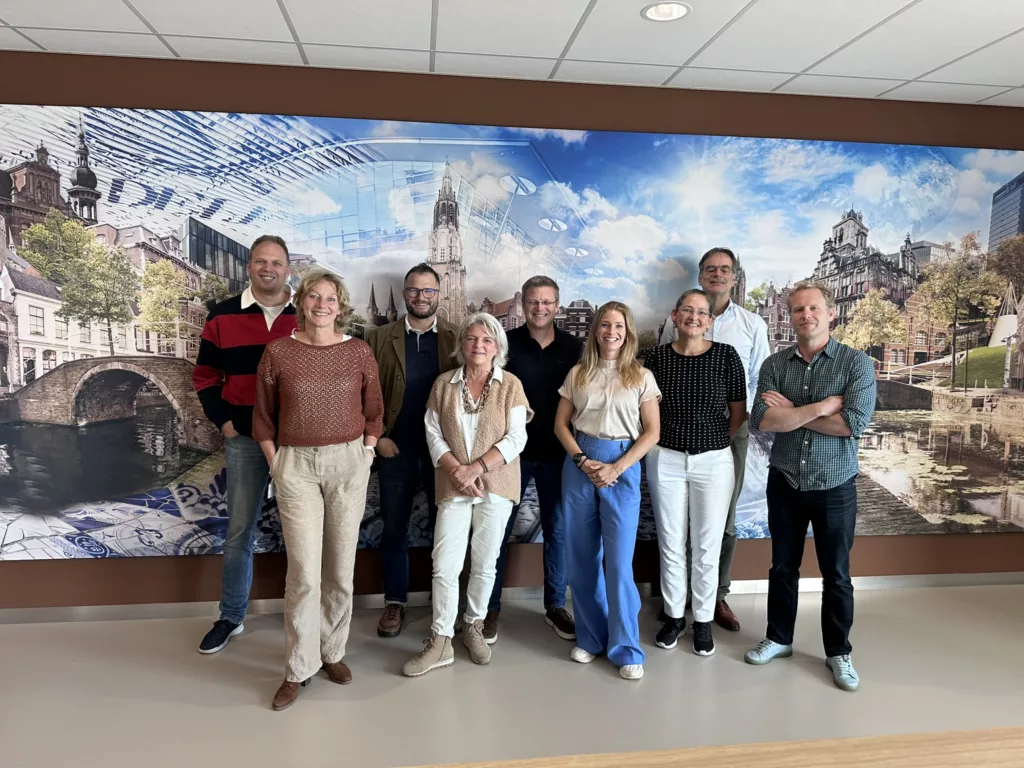
Prof. dr. Yingguang Frank Chan (Co-Project Leader, GELIFES, Univ. Groningen); Prof. dr. Gerton Lunter (Co-Project Leader, UMCG), Marek Kučka

Project Number

BIOB25010

Year granted

2025

Status

Ongoing

Applicant

University of Groningen

Funding

€ 196.545

Sector/Industry

Agri- & Horticulture

SDG's

Zero hunger (SDG 2)
Reduced inequalities (SDG 10)
Responsible consumption and production (SDG 12)
Climate action (SDG 13)
Life below water (SDG 14)
Life on land (SDG 15)

Thematic Cluster

TC2: Agriculture & Food

Level

Level 1
Molecuul

2025

Year granted

University of Groningen

Applicant

€ 196.545

Project funded
IBB

Behind the Bootcamp: Meet the IBB26 Coaches

Building an industrial biotech venture takes more than a great scientific idea. It requires the ability to challenge assumptions, make

Behind the Bootcamp: Meet the IBB26 Coaches
Project story

From Luggage Tags to Better Food

From fragmented DNA to better food on our plates. We interviewed Biotech Booster project Haplotagging to learn more about their

From Luggage Tags to Better Food
Impact developer portrait

The Innovation Journey at the Universities of Applied Sciences

Impact Developers help researchers turn their ideas into innovations that impact society. They connect researchers with companies and other partners

The Innovation Journey at the Universities of Applied Sciences
Alumni Column

Alumni column: Patrick Dekker from iProtics

On both sides of the table. Some people know Biotech Booster from the outside. Others experience it from the inside,

Alumni column: Patrick Dekker from iProtics
Impact developer portrait

The Innovation Journey at the University of Applied Sciences

Biotech Booster connects Business Developers and Impact Developers to the broader ecosystem. While both roles focus on transforming knowledge into

The Innovation Journey at the University of Applied Sciences
IBB

Meet the Industrial Biotech Bootcamp 2026 cohort

The selection process is complete, and we are excited to introduce the teams selected for the 2026 Industrial Biotech Bootcamp

Meet the Industrial Biotech Bootcamp 2026 cohort
Citaat

Biotech Booster helps us through funding and by providing us with a network to validate where we can make the best impact with our new analysis device.

Biotechnology netherlands

Carlos de Lannoy

Constellate

Citaat

What we look forward to most is leveraging the extraordinary network of Biotech Booster that we need to get foot in the market, get know-how, and understanding the competitive field which is necessary for setting up successful operations.

Biotechnology netherlands

Pim Schaasberg & Martin Pabst

ProteoT

Moleculen

Newsletter

Receive monthly updates about our community!

Subscribe to our newsletter