Biotech Booster connects Business Developers and the newly introduced Impact Developers to the broader ecosystem. While both roles focus on transforming knowledge into impact, they operate in different contexts. Since the role of the Impact Developer has been recently introduced at the Universities of Applied Science, we plan to feature monthly interviews with Impact Developers in our program.
Business Developers work in research universities and university medical centers, where valorization follows already established paths. Impact Developers operate at Universities of Applied Sciences (UAS), innovating closer to real-world challenges with industry partners.
This creates another kind of valorization: practice-driven, fast-moving, and focused on higher Technology Readiness Levels. At the same time, it presents unique challenges, as knowledge-transfer structures within UAS continue to evolve and hold significant untapped potential.
Across the Netherlands, Impact Developers connect researchers, companies, and societal partners to support innovation and shape new pathways for impact. To showcase their work and perspectives, we are launching “Meet the Impact Developer”, a monthly Q&A series highlighting the people driving innovation within UAS.
If you have an idea at a UAS or are an industry partner seeking applied R&D, connect with the innovators featured in this series and explore opportunities to collaborate.
Q: Who are you, and what does your role look like in practice?
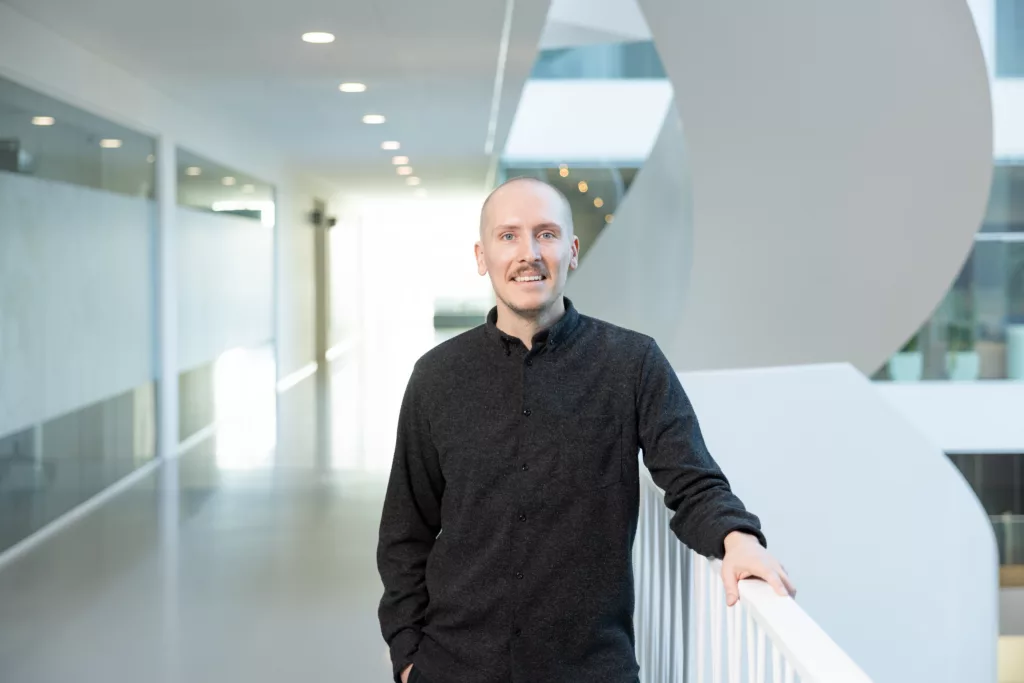
My name is Kathrin Metselaar, and for the past two and a half years, I have worked as an impact developer at the Hogeschool van Amsterdam. I coach researchers who want to make a difference outside of academia with their work. Every research project or innovation needs its own unique strategy to create impact, and I am glad to be part of that journey.
Q: What inspires or drives you most about working at a University of Applied Sciences?
I am inspired by people who want to make a real difference in society. There is no single way to turn research into impact, so it can be challenging to find the best approach each time. I especially enjoy coaching early-stage entrepreneurs who are still learning to grow their businesses, as well as researchers seeking ways to create impact.
Q: What makes innovation at a UAS different from other knowledge institutions?
At a UAS, research begins with questions that come directly from society. This is different from the curiosity-driven research you often see elsewhere. Innovations at UAS are developed in collaboration with partners in the field, and some can be implemented right away. Small businesses, institutions, and network partners all benefit directly from the insights gained through UAS research.
Q: Can you share a moment that really stayed with you?
I am most impressed when people go out of their way to share research results with others, or try to do their best to explore how to commercialize their results to make more impact. When a researcher steps out of their comfort zone and takes actions they would otherwise not have taken as a researcher, it makes me feel like my coaching is meaningful. This is often the case when researchers becomes an entrepreneur.
Q: What is something people often misunderstand about your work?
Research results are not usually finished products, processes, or services. Most of the time, they need more development before they can move forward.
Q: Where do you see the biggest opportunity for UAS in the coming years?
I see the biggest opportunity in making it more common to think about impact right from the start of research projects.
Q: What would you say to someone considering working with a UAS?
Trying out different ways to create impact is very rewarding, but it is never easy!
Curious about the rest of the people behind Biotech Booster? Keep an eye out on our LinkedIn page to stay up-to-date!